The Complete Guide to Choosing Hearing Aids in Australia: Technology, Costs, Government Funding and What Really Matters

Clinically reviewed by Ben Gillespie, Audiometrist at Telex Hearing Care | NSW Central Coast | Updated October 2026
Choosing a hearing aid should not begin with a brand name, a special offer or a price tag. It should begin with a simple question: Which hearing solution will help you hear better in the situations that matter most to your life?
For some people, that means following conversations with family. For others, it means understanding colleagues at work, hearing grandchildren clearly or enjoying dinner at a busy restaurant without feeling exhausted from trying to follow the conversation.
Today’s hearing aids offer advanced speech processing, rechargeable batteries, smartphone connectivity and increasingly sophisticated systems designed to help people hear speech in background noise. But more technology does not automatically mean better hearing for every person.
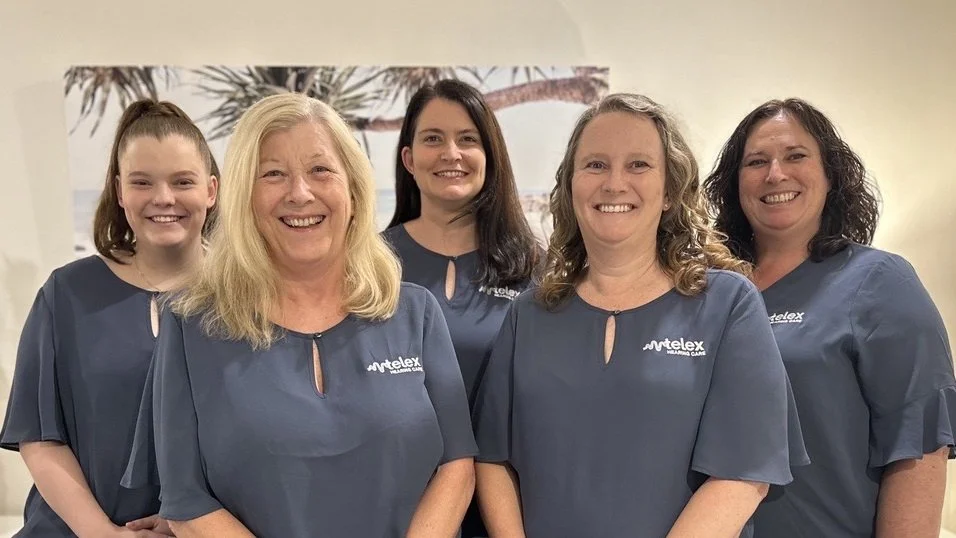
At Telex Hearing Care, our approach is to understand your hearing, lifestyle and priorities before recommending a solution. As an independent, family-owned hearing care provider serving the NSW Central Coast, we can consider hearing aids from different manufacturers rather than restricting recommendations to one brand.
This guide explains how technology levels differ, what influences cost, which government funding options may be available and why professional assessment and fitting matter.
Understanding hearing loss before choosing hearing aids
Not all hearing loss is the same. Two people may have similar results on a basic hearing test but experience very different difficulties in everyday life. One may hear reasonably well in quiet environments but struggle in restaurants. Another may find softer voices difficult to hear even at home. Hearing loss differs in degree, configuration, type and impact on speech understanding.
Choosing hearing aids should therefore begin with a comprehensive hearing assessment rather than selecting a device based on advertising or online reviews. An assessment may include measurements of hearing thresholds, evaluation of middle-ear function when appropriate and speech-understanding tests. The results help determine whether hearing aids are suitable and which features are likely to be useful.
Learn more about our comprehensive hearing assessments.
Are the most expensive hearing aids always the best?
No. The most expensive hearing aid is not automatically the best hearing aid for your individual needs. Premium hearing aids generally include the manufacturer’s most advanced processing features, which may help in challenging environments. Whether they deliver a meaningful improvement depends on hearing loss, lifestyle, preferences and fitting quality.
A quieter lifestyle: Someone who mainly enjoys one-to-one conversations at home and occasional small gatherings may achieve satisfactory results with a more affordable technology level.
A socially active lifestyle: Someone attending meetings, dining in busy restaurants and participating in group conversations may benefit from more sophisticated speech processing, directional microphones and noise management. Even premium technology cannot guarantee effortless hearing everywhere.
The objective is not to sell the highest technology level. It is to identify the features likely to make a meaningful difference.
Understanding hearing aid technology levels
Essential technology
Essential hearing aids are designed to improve access to sounds and speech, particularly in quieter listening environments. They may suit people with relatively straightforward listening requirements, depending on their hearing loss.
Mid-range technology
Mid-range devices generally provide additional processing capabilities and flexibility across different environments. They may suit people who regularly move between quiet and moderately challenging situations.
Premium technology
Premium hearing aids typically include a manufacturer’s most advanced features for complex environments. Depending on the product, these can include sophisticated directional microphones, adaptive processing, speech enhancement and noise management. Benefits vary by individual and situation.
What matters is whether the features address the problems you actually experience. Explore hearing aid options at Telex Hearing Care.
Why hearing in background noise is challenging
“I can hear people talking, but I can’t understand them when there is background noise.” This is a common experience. Speech understanding requires more than detecting sound: the auditory system must distinguish important speech information from competing sounds.
In restaurants, surrounding voices, music and activity compete for attention. Modern hearing aids use directional microphones, noise reduction and adaptive speech processing to address these challenges. Some newer products use machine-learning-based techniques to classify sound or help distinguish speech from noise.
No hearing aid can completely eliminate background noise or restore normal hearing in every situation. For people who struggle in restaurants, meetings or group conversations, those specific goals should be central to device selection.
Why independent hearing care matters
Major hearing aid manufacturers take different approaches to sound processing, physical design, connectivity and hearing assistance. No single manufacturer is necessarily the best for everyone. A device with excellent processing may still be unsuitable for someone’s ear anatomy, handling ability or preferred listening experience.
Telex Hearing Care is an independent, family-owned provider that is not owned by a hearing aid manufacturer. This gives practitioners the flexibility to consider solutions from different manufacturers based on clinical suitability, lifestyle and budget.
Learn more about our hearing aid manufacturers and independent approach.
Why professional hearing aid fitting matters
A hearing aid is a programmable medical device that must be selected and adjusted for individual needs. Two people using the same model may require substantially different settings. Professional fitting considers hearing thresholds, ear anatomy, sound tolerance, physical comfort and communication goals.
An important verification technique is real-ear measurement, which measures sound delivered by the hearing aid inside the ear canal. Where clinically appropriate, this helps a practitioner assess how closely the output matches prescribed amplification targets. Follow-up evaluation and adjustments may improve comfort and benefit.
A sophisticated device that is poorly fitted may not deliver its intended benefits. Conversely, an appropriately selected and verified lower-tier device may provide excellent results for someone whose needs it meets.
Ready to understand your hearing options? Contact Telex Hearing Care to enquire about an assessment.
What determines the cost of hearing aids in Australia?
Hearing aid costs vary because patients are not necessarily purchasing identical devices or services. The technology level, device style, rechargeability, connectivity, customisation, professional assessment, fitting, verification, follow-up, warranty and maintenance arrangements can all influence the total cost.
Government funding can also change the amount an eligible patient pays. Some eligible people may receive fully subsidised devices and services, while other device choices can involve an additional contribution.
The lowest advertised price does not necessarily represent the lowest total cost of hearing care. Equally, a higher price does not automatically mean a better result. Ask what is included, what may cost extra and what support you are likely to need.
For related questions, visit our hearing care frequently asked questions.
Can you receive government-funded hearing aids in Australia?
Many Australians may qualify for subsidised hearing services and devices. The Australian Government Hearing Services Program supports eligible people through different arrangements, including a voucher scheme and community service obligations. Eligibility depends on specific criteria and is not determined by age alone.
Depending on individual circumstances, eligible groups may include certain pensioner concession card holders, Department of Veterans’ Affairs card holders, Australian Defence Force members and other qualifying applicants. A Commonwealth Seniors Health Card alone does not establish eligibility for the voucher scheme.
Eligible patients may access fully subsidised devices and services, while some optional device choices may involve an additional payment. Other possible assistance pathways include applicable workers compensation arrangements, private health insurance benefits and certain NDIS-related supports, subject to their own rules.
Learn more about hearing aid funding options and information for pensioners and DVA clients. For current rules, consult the Australian Government Hearing Services Program eligibility information.
Rechargeable or disposable-battery hearing aids?
Rechargeable hearing aids eliminate routine handling of small disposable batteries and can be convenient when placed in a charger overnight. But they are not necessarily ideal for everyone. Extended time away from charging facilities, travel requirements, handling ability and personal preference can affect the decision.
Does Bluetooth connectivity make a hearing aid better?
Bluetooth may allow compatible hearing aids to connect to smartphones and other devices for streaming, calls or app-based controls. These features can be valuable, but they do not necessarily indicate how well the device will help with speech in a noisy restaurant. Compatibility depends on the hearing aid, phone and operating system.
How long should hearing aids last?
Hearing aid longevity depends on construction, moisture and debris exposure, maintenance, battery condition, changes in hearing and manufacturer support. Many devices remain useful for several years with appropriate care. A new model is not automatically necessary simply because a new generation has been released.
A review may be useful if hearing needs change, reliability declines or newer technology offers a meaningful improvement for a specific difficulty. Sometimes professional troubleshooting can improve an existing device without replacing it.
Five questions to ask before buying hearing aids
Which everyday listening difficulties are we trying to improve?
Why is this particular hearing aid being recommended over other suitable choices?
How will the fitting be verified and the outcome assessed?
What is included in the total cost, and what might cost extra?
How will we know whether the hearing aids are helping in real life?
Frequently asked questions
What are the best hearing aids in Australia?
There is no single best device for everyone. Suitability depends on hearing loss, communication goals, preferences and fitting quality.
Are premium hearing aids worth the extra cost?
They can be for people who benefit from advanced features, particularly in complex environments, but not everyone needs premium technology.
Can hearing aids help in restaurants?
They can improve access to speech in noise, but the benefit varies and some settings remain difficult.
Can pensioners receive free hearing aids?
Eligible pensioners may receive fully subsidised devices and services under the Hearing Services Program; eligibility and optional upgrade costs must be confirmed.
Do I need a doctor's referral for a hearing test?
A referral is not generally required for a routine assessment booked directly, although particular funding or medical circumstances may have additional requirements.
Should I replace my hearing aids when a new model comes out?
Not necessarily. The decision should depend on current performance, hearing needs, reliability and meaningful benefit from new features.
Choosing hearing care on the NSW Central Coast
Finding the right hearing aid is only one part of better hearing. Equally important is finding a professional who understands your needs, explains the options and provides appropriate support.
Telex Hearing Care is an independent, family-owned provider serving communities across the Central Coast of New South Wales, including Killarney Vale, Wyoming/Gosford and Kanwal. Whether you are considering hearing aids for the first time, reviewing existing devices or exploring funded care, our team can help you understand your options.
Better hearing begins with the right advice, not simply the newest or most expensive technology.